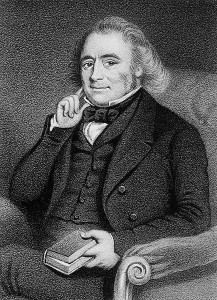
"I am brief myself," Hartley Coleridge declared, "brief in stature..." It is enough to make the short researcher rejoice - "Hurrah!" I cried (or should have), "I have something in common with my researchee!" - until we read on: "...brief in discourse, short of memory and money, and far short of my wishes." "Li'l Hartley", as he was called by his Grasmere neighbours throughout his adult life, was a part of that select group of nineteenth-century writers: those who, in John Keats's words, were "five feet hight." Derwent Coleridge recalled in his "Memoir" of his brother that
The singularity of his appearance, by which he was distinguished through life, and which, together with the shortness of his stature, (possibly attributable in some measure to his premature birth,) had a marked influence on the formation of his character, was apparent from the first...
 |
Hartley Coleridge - possessed of a
"singularity of appearance" |
Samuel Taylor Coleridge noted this "singularity" of appearance, writing to a friend after his wife had told him of the similarities between his own looks and the baby's that "in truth, I have received finer compliments in my time." Hartley was not destined to be the looker of his family (that accolade was left for his younger sister Sara, a renowned beauty in her youth). That his looks affected his life Hartley was in no doubt; he was painfully aware of the affect of his appearance on women. But Derwent's suggestion that they affected his character from a young age is telling; it is an early indication of the self-conscious connections between his body and his mind that Hartley was to acknowledge increasingly as he got older, and which others were to notice more and more as his alcohol consumption increased. For Hartley, as for his relatives, his short stature was taken as a metaphor for his disappointing creative output. Echoing his brother's essay, Derwent Coleridge suggested that "all who knew my brother with any degree of intimacy, are agreed that his written productions fall far, very far short of what he might, under happier circumstances, have achieved."
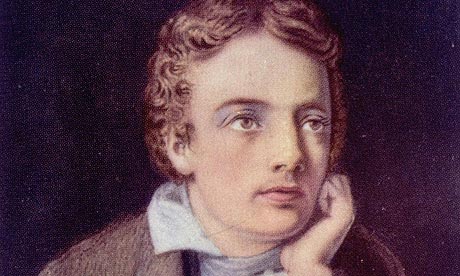
For John Keats, too, this sensitivity about his short stature was self-consciously bound up with his anxieties regarding women. As he wrote in July 1818,
I am certain I have not a right feeling towards Women--at this moment I am striving to be just to them but I cannot--Is it because they fall so far beneath my Boyish imagination? When I was a Schoolboy I thought a fair Woman a pure Goddess, my mind was a soft nest in which some one of them slept though she knew it not--I have no right to expect more than their reality. I thought them etherial above Men--I find them perhaps equal.... I do not like to think insults in a Lady's Company--I commit a Crime with her which absence would have not known--Is it not extraordinary? When among Men I have no evil thoughts, no malice, no spleen--I feel free to speak or to be silent--I can listen and from every one I can learn--my hands are in my pockets I am free from all suspicion and comfortable. When I am among Women I have evil thoughts, malice spleen--I cannot speak or be silent--I am full of Suspicions and therefore listen to no thing--I am in a hurry to be gone--You must be charitable and put all this perversity to my being disappointed since Boyhood–. . . I could say a good deal about this but I will leave it in hopes of better and more worthy dispositions--and also content that I am wronging no one, for after all I do think better of Womankind than to suppose they care whether Mister John Keats five feet hight likes them or not.
 |
| John Keats: just "five feet hight" |
However, Keats's concerns about women seem to be a cipher for his height-related anxieties about his creative abilities. When he was young, before his shortness upset him, women could sleep in the "soft nest" of his mind; that young mind was then a willing receptacle, open to divine inspiration. This older, self-consciously small poet is affected to his creative detriment: the "Goddess" of his youth resided in his imagination, producing "fair", fruitful thoughts; the real women he meets as an adult inhibit this creative process. It is not a process which men can help him with: although men enable him to "speak" or to "listen," they do not engage his mind in an active process of poetic creation. Keats's poetic power is, it seems, androgynous; a feminine aspect is necessary. His identity as a man, too, is bound up with his awareness of his perceived unmanly height: "five feet hight" seems almost an addition to his name, as if it is both of these attributes which defines the poet to both himself and to "Womankind."
Fortunately, perhaps, for those short people who long for an extra few inches, neither of these men are remembered predominantly for being short, just as Byron is not remembered for his height. It is those other connotations of brevity which are far more damaging. Hartley's complaints of his shortness are from a rather long essay entitled "
On Brevity", which Hartley cuts short from an awareness that he has already exceeded his point. It is a playful essay, and indicates the extent to which this creative or professional "brevity" lies entirely in the writer's hands to solve.
(Brevity of money, on the other hand, he provides no answers for. Sorry.)


.jpg)